
Hand-selected strands across four pearl types — graded to your target price points, volume ready for wholesale.
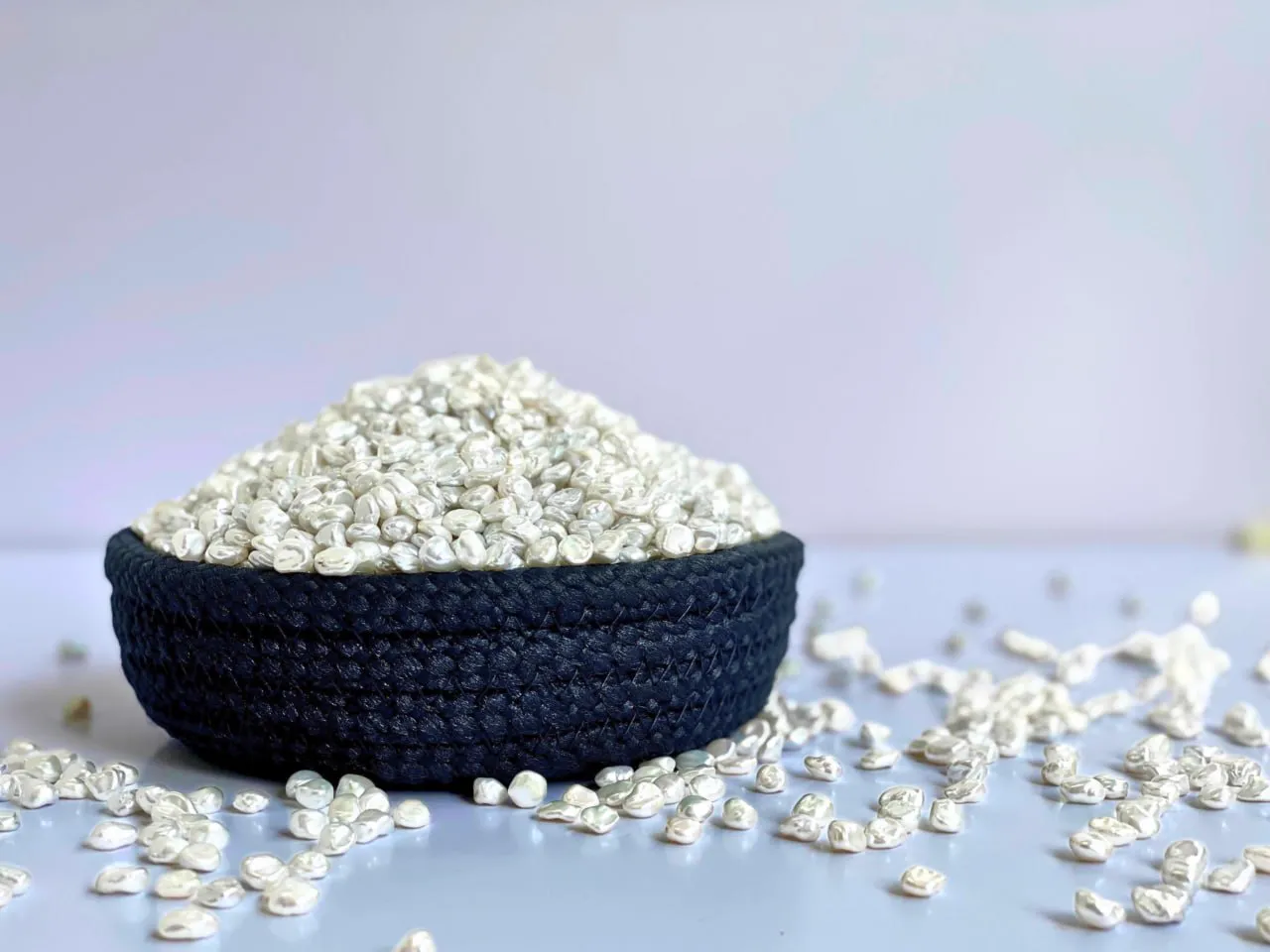
Cultured in freshwater lakes and rivers — principally in China — freshwater pearls offer the widest range of sizes, shapes and colours of any pearl type, from classic round to expressive baroque. Their versatility and value make them the workhorse of commercial pearl jewellery.
We supply them across all quality grades — tell us your target price point and volume, and we will match the strand.
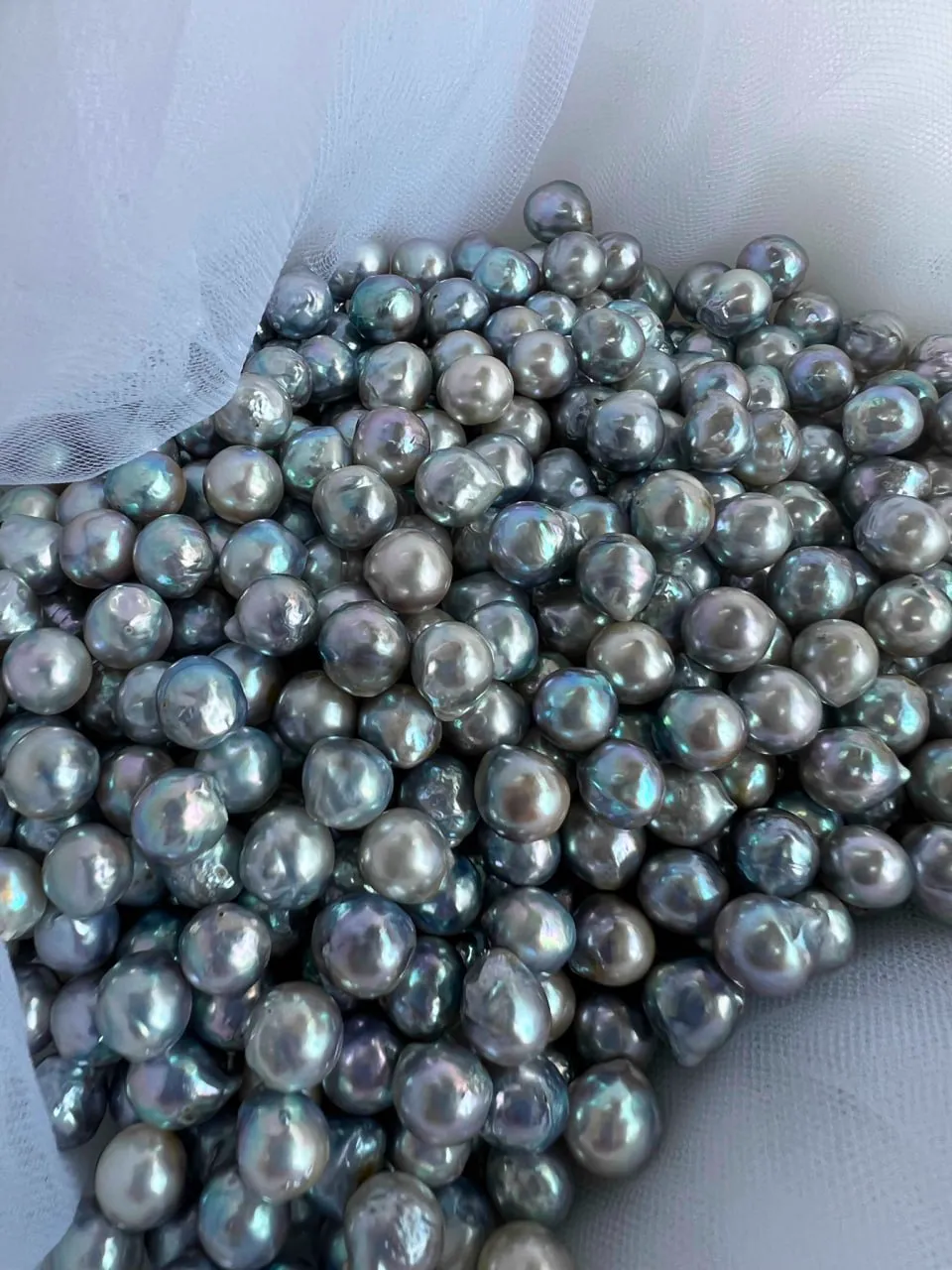
The classic saltwater pearl — round, white and famous for its sharp, mirror-like lustre with delicate rose and silver overtones. Commonly 5–8mm, it remains the definitive pearl for traditional fine jewellery.
Available as matched pairs, strands and half-drilled loose pearls ready for your own settings.
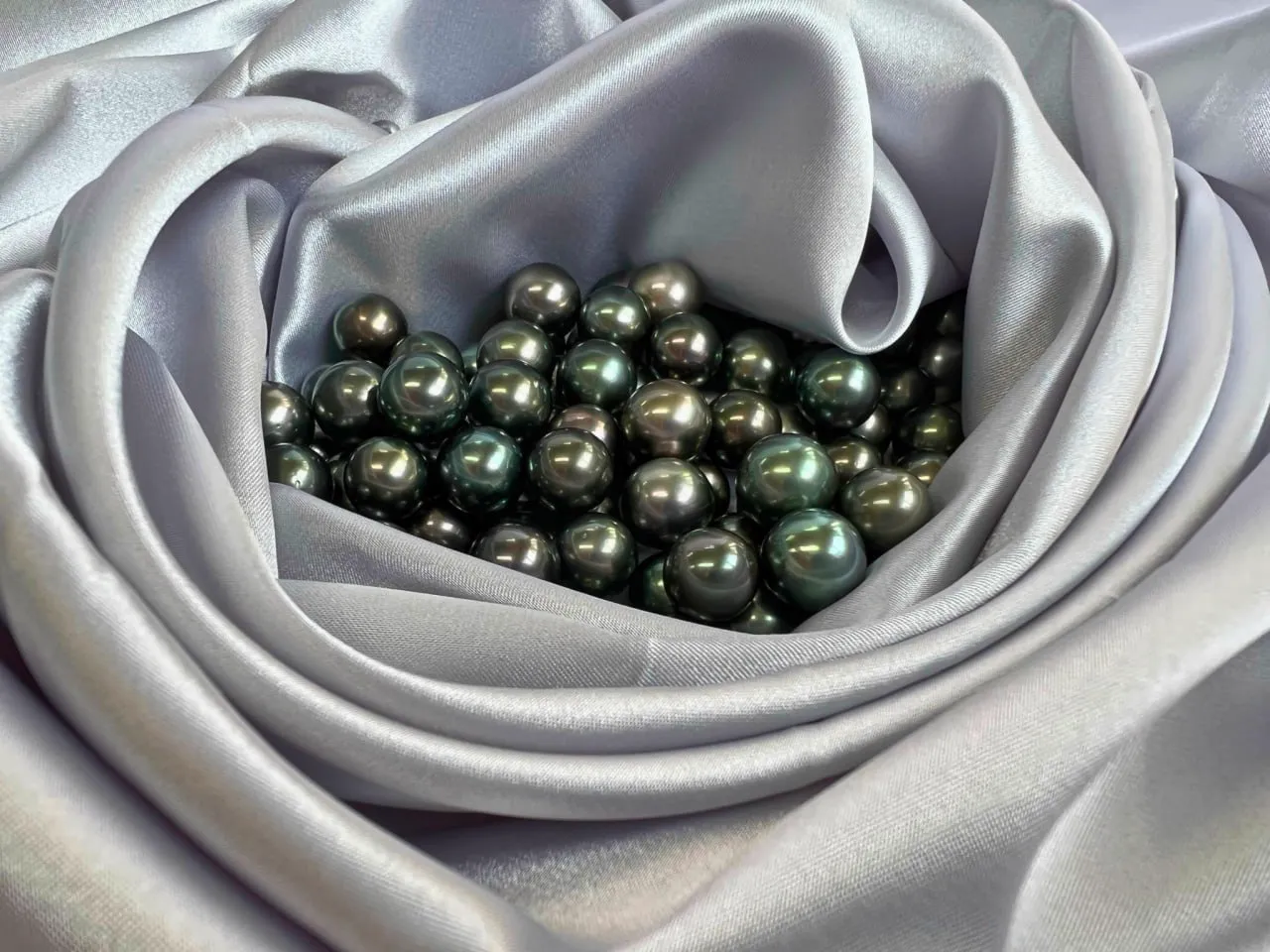
Naturally dark — silver, grey, peacock and black body colours that no other pearl type produces without treatment. Cultivated in French Polynesia and typically 8–14mm, Tahitian pearls make statement jewellery with real character.
We stock loose pearls and full strands, and mount them in karat gold and sterling silver designs.
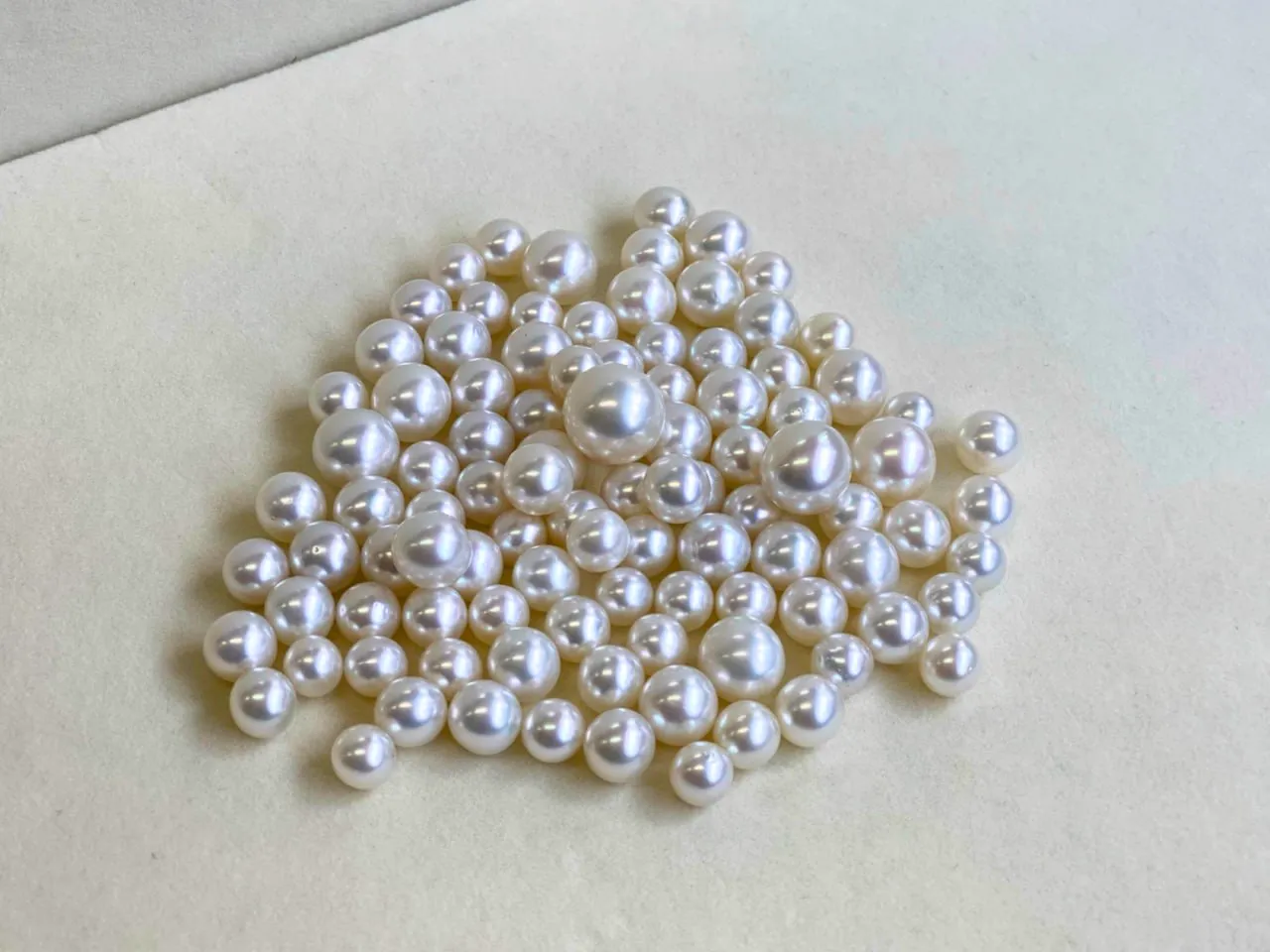
The largest and most luxurious of all cultured pearls — warm white and golden body colours with a soft, satiny lustre, typically from 9mm upwards. South Sea pearls anchor the finest high-jewellery pieces.
Sourced to order as well as from stock — enquire about sizes, colours and quantities.
Full guides on grading, care and buying — see our Knowledge page.
Store pearls away from other jewellery that may scratch their surface. Avoid wearing them while bathing or swimming, and wipe away sweat with a soft cloth after wear. Wrap them in a soft cloth or pouch — never in an airtight plastic bag, as pearls need to breathe.
A quick test is temperature: real pearls feel cool to the touch at first and adjust to your body warmth as worn, while synthetic pearls tend to stay at one temperature.
Lustre is the simplest indicator of pearl quality. A high-lustre pearl reflects light almost like a mirror; a low-lustre pearl looks dull and chalky.
Natural pearls form in the wild without human intervention — extremely rare, and most on the market today are antiques. Cultured pearls are grown on farms with human intervention, which is how virtually all modern pearls are produced.
Yes — the A to AAA system grades pearls by surface quality, lustre, and shape (roundness and symmetry).
Four: Freshwater, Akoya, Tahitian and South Sea pearls — plus finished jewellery set in karat gold and sterling silver, and tailor-made designs.
Send us a photo or a spec — we will quote the right pearl at the right grade.